
Buying guide
Is a rollator wheelchair combo worth it?
A 2-in-1 suits someone who walks a little, tires, then needs pushing. If they mostly walk or mostly sit, it is the wrong buy.
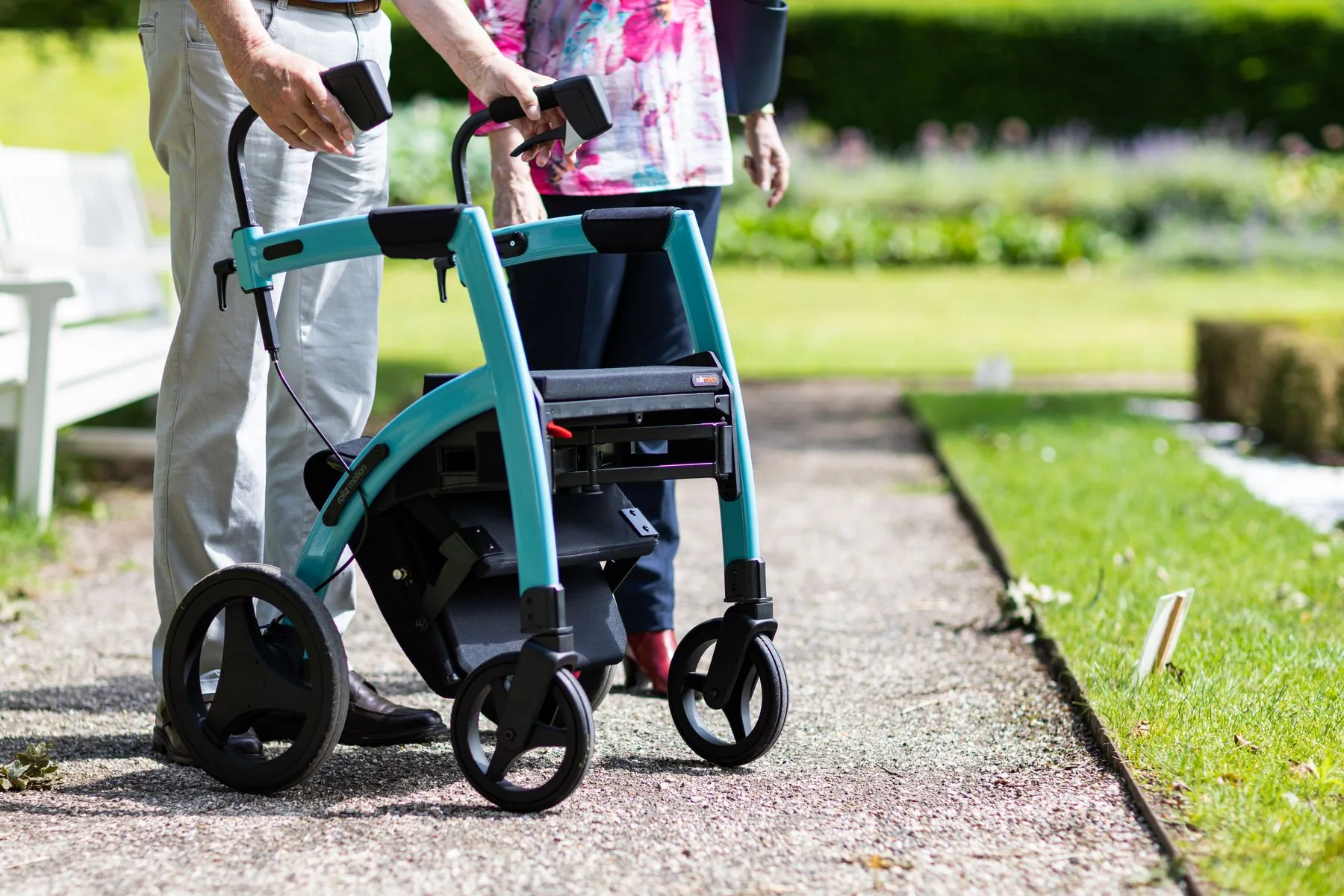
What a rollator wheelchair combo actually is
A rollator wheelchair combo is one frame that works two ways. In rollator mode, the person walks behind it, holds the handles and uses the hand brakes. When they need to rest, there is a seat. In wheelchair mode, the seat or backrest flips, footrests go on, and a companion pushes the person from behind, much like a transport chair.
The combo is built for a specific pattern of movement: someone who can walk, but not reliably for the whole of an outing. They walk while they have the energy and ride when they don't, and they don't need to bring two pieces of equipment.
Where it earns its place
For the right person, a combo changes what an ordinary day can include. Some common situations where it fits well:
- Outings with an unknown distance. A museum, a wedding, an airport, a long shopping trip: places where walking out is possible but walking back is uncertain.
- Fatigue that builds through the day. Some people are steady in the morning and tired by the afternoon. The combo lets the outing continue instead of ending early.
- Keeping walking as part of the routine. Walking when you can helps maintain strength and confidence. A combo supports that in a way a wheelchair used full time does not.
- One thing in the car, not two. For a family helping with outings, carrying one frame is simpler than carrying a rollator and a transport chair.
The trade-offs to weigh honestly
A combo does two jobs, and it gives up something in each to do both.
As a rollator, it is usually heavier and bulkier than a standard rollator, because the frame has to carry a seated person safely while being pushed. Indoors and in tight spaces that extra size is noticeable, and the person lifting it into a car will feel the extra weight.
As a chair, it is usually less comfortable and less supportive than a dedicated transport chair or wheelchair. Its wheels are typically small, so it handles curbs, gravel and grass less well, and it is designed to be pushed by someone else, not propelled by the person sitting in it. It works for getting from one place to another. It is not made for sitting in for hours.
One safety point matters here: a standard rollator is not a wheelchair. Pushing someone who is sitting on an ordinary rollator seat is a common habit and a real risk, and manufacturers warn against it. If that is already happening in your family, a combo, which is designed for being pushed, is a genuine improvement.
When a combo will not solve the problem
Sometimes the honest answer is that no frame, however well designed, will fix what is actually going on.
If someone is falling or close to falling because of balance problems, dizziness or weakness, the cause needs assessing before anything is bought. A combo is still a walking aid in rollator mode, and it cannot correct unsteadiness that comes from a medical issue, a medication side effect or an untreated condition. If walking is limited by pain, treating the pain may give back more distance than any equipment would.
The reverse is also true. If the person can no longer walk safely for even short stretches, a combo's walking mode will rarely be used, and a proper wheelchair or transport chair will serve them better. If there is usually no companion available to push, wheelchair mode isn't much use day to day.
In each of these cases, the right first step is an assessment by a physical therapist or occupational therapist, not a purchase.
Part of adapting, not a final answer
A combo is most useful when it is seen as one stage in an ongoing process. How someone moves changes over time, sometimes gradually, sometimes after an illness or a hospital stay, sometimes in a good direction after rehabilitation. The equipment that fits today may not fit in two years, and that is expected.
The aim is to stay active, involved and independent as needs change. For more on thinking about mobility this way, see our guide to Mobility Adaptation.
What to measure and ask before you choose
Specifications vary widely between models, so check each one against the actual person and the actual places they go.
- Handle height: with the person standing upright and their arms relaxed at their sides, the handles should sit at about wrist level. Check that the model adjusts to that height.
- Seat height and width: when seated, their feet should rest comfortably and their hips should fit without pressing against the sides of the frame.
- Weight capacity: confirm the manufacturer's stated limit for both modes, and make sure it comfortably exceeds the person's weight.
- Folded weight and size: can the companion lift it into the car without strain, and does it fit in the trunk alongside everything else?
- Doorways and turning space: measure the narrowest doorway at home and at places visited often, and compare it with the frame's open width.
- Brakes: are there locking parking brakes, and can the person squeeze and lock them with their own hand strength?
- Back support and footrests: in chair mode, is there a real backrest, and do the footrests attach and detach easily?
- Ask a therapist: "Given how this person walks now, and how that is likely to change, is a combo the right fit, or would separate pieces serve them better?"
If the answers line up, a combo can make outings longer, easier and more frequent. If they don't, that is useful to know before buying.
General information, not medical advice. If fit, posture, pressure relief or fall risk is part of your decision, speak to an occupational therapist.